
Haibo Chen (Shanghai Jiao Tong University)
Abstract
Cloud computing is undergoing a paradigm shift, transitioning from deterministic microservices to autonomous, dynamic AI agents. These agentic workloads exhibit fundamentally new characteristics: unpredictable execution graphs requiring safe exploration, massive long-lived state, and millisecond-scale responsiveness. Traditional operating system abstractions, such as static containers, block storage, and rigid accelerator scheduling, were not designed for this extreme heterogeneity, leading to severe resource fragmentation and scalability bottlenecks in modern cloud infrastructure. In this talk, I argue that the Agentic Era demands a fundamental rewiring of system-level abstractions. I will present a vision for the Agentic Cloud OS, built on three directions: (1) Agile Compute and Safe Execution: replacing heavy containers with millisecond-level, rollbackable sandboxes; unifying preemptive scheduling across heterogeneous accelerators; and enabling O(1) live autoscaling for large models. (2) Next-Generation Storage and Generative Systems: moving from manually coded file systems to generative, specification-driven architectures; introducing semantic data abstractions; and exploiting ultra-high-density biochemical memory for extreme-scale state persistence of cold storage. (3) AI-Native Orchestration: elevating dynamic agent execution graphs, multi-agent concurrency, and physical/biochemical workflows to first-class cloud resources, enabling the seamless orchestration of autonomous laboratories and cross-domain pipelines. I will conclude by outlining open challenges for the systems community in bridging silicon computing, generative AI, and synthetic biology for the next decade of intelligent infrastructure.
Bio
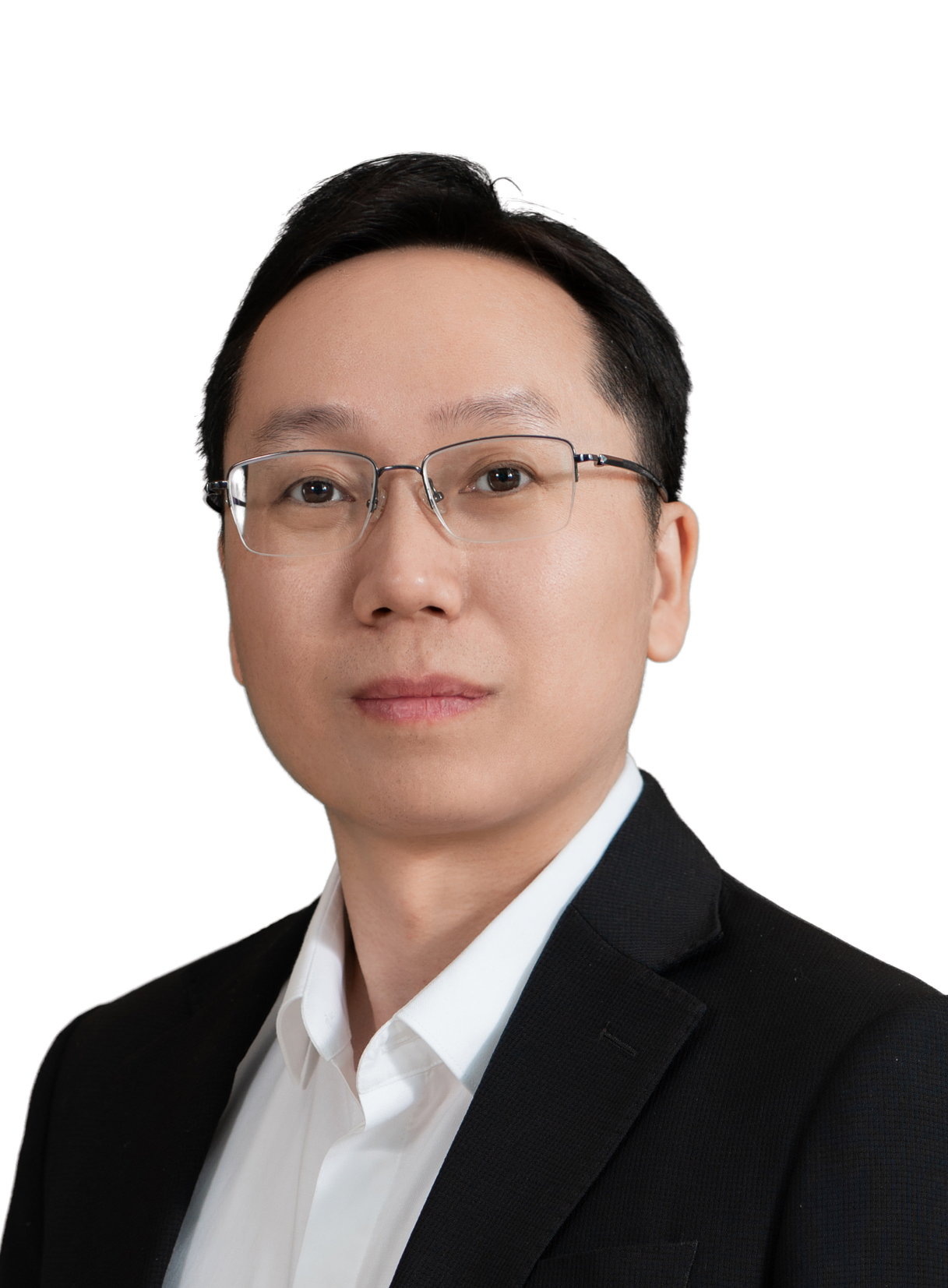
Haibo Chen is a Distinguished Professor at Shanghai Jiao Tong University, where he founded and directs the Institute of Parallel and Distributed Systems (IPADS). His main research areas include operating systems, distributed systems, machine learning systems, and AI for Science. He has published extensively in top-tier conferences and journals, including Nature, SOSP, OSDI, ISCA, ASPLOS, FAST, EuroSys, and ATC. His work has been recognized with numerous accolades, including Best Paper Awards at SOSP, ASPLOS, EuroSys, and FAST; a Test of Time Award from DSN; a Best Paper Honorable Mention and Research Highlight Award from SIGMOD; a Research Highlight from Communications of the ACM (CACM); and an Honorable Mention for the ACM SIGOPS Dennis M. Ritchie Thesis Award (as Advisor).
He currently serves as an Editorial Board Member for CACM Research and Advances, co-chairs the CACM Regional Special Sections, and is the General Co-Chair for ASPLOS 2028. He is also the founding Chair of the Technical Steering Committee for OpenHarmony, an open-source operating system deployed on hundreds of millions of devices. Prof. Chen is an ACM Fellow and an IEEE Fellow, and currently chairs ACM SIGOPS.